

Rebranding Your Business? Here's Every Piece of Print You'll Need to Update
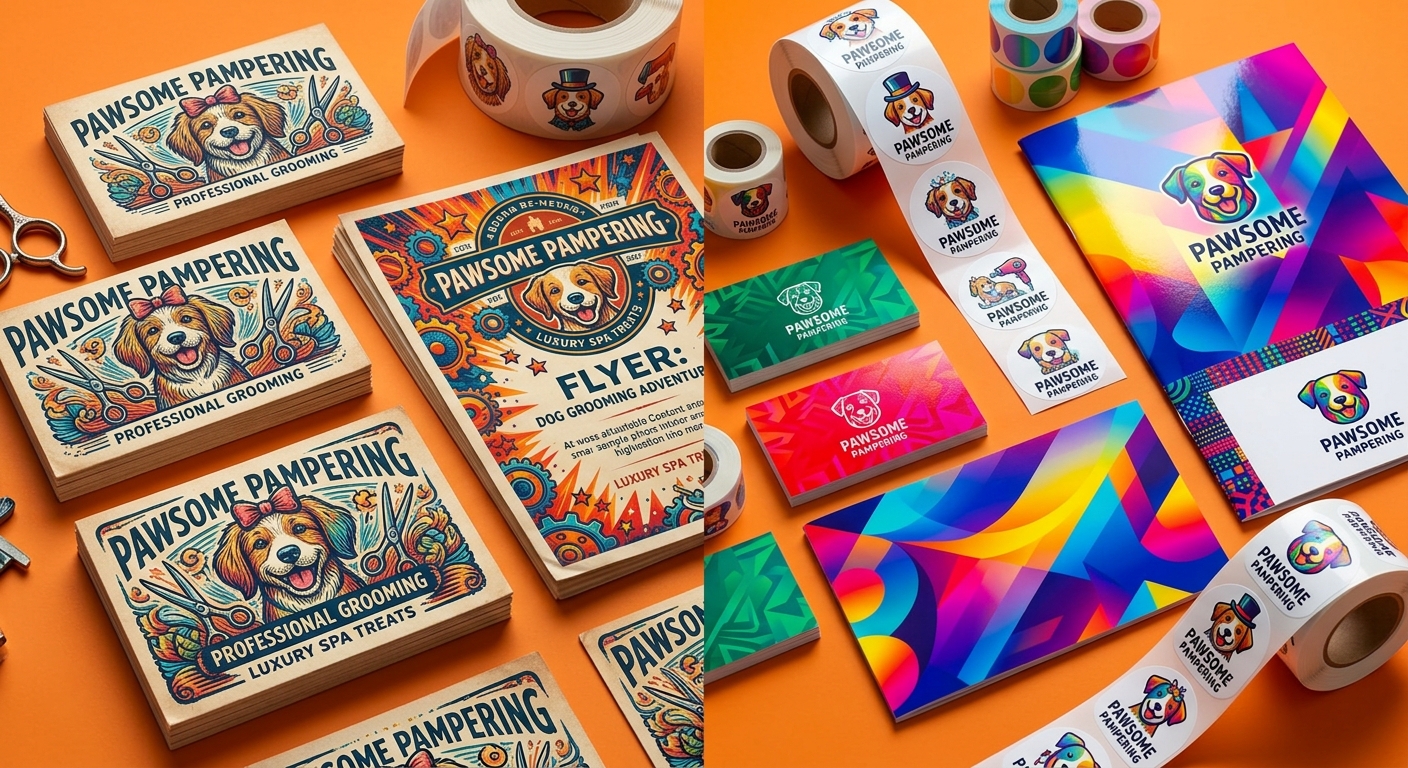
A rebrand — a new logo, updated colours, a refreshed visual identity — genuinely ripples through every printed touchpoint a business has, and it's easy to miss an item during the transition, leaving outdated branding in circulation alongside your new identity. Here's a practical, comprehensive checklist to work through.
Core business essentials
Business cards — usually one of the first items updated, given how quickly they're reordered and used.
Letterheads and compliment slips, if still in active use — see our guide to whether businesses still need printed stationery.
Stamps, if your business uses one — see our guide to custom stamps for small business.
Shopfront and physical premises
Window decals and shop signage — see our guide to window stickers vs vinyl decals.
Opening hours decals, if your logo or colours appear on them — see our guide to opening hours decals.
Any external signage, checked against local planning requirements before replacement.
Packaging and product-facing materials
Custom packaging tape — see our guide to water-activated vs standard tape.
Product labels and stickers — see our guide to custom stickers vs custom labels.
Any branded boxes or bags, if applicable to your business.
Staff-facing materials
Uniforms and embroidered apparel — see our guide to branded workwear vs plain uniforms, noting that embroidery involves a digitising cost that a rebrand will trigger fresh, since the old digitised file matches your outdated logo.
Lanyards and ID badges — see our guide to lanyards materials and fittings.
Marketing and promotional materials
Flyers, posters and brochures in active circulation.
Vehicle decals, if applicable — see our guide to vinyl decals for vans and vehicles.
Any promotional merchandise — mugs, notepads, bags — currently in production or planned for reorder.
Prioritising what to update first
Rather than trying to update everything simultaneously, prioritise by visibility and how quickly the old branding will naturally cycle out — shopfront signage and business cards, being highly visible and quickly reordered, generally take priority, while lower-visibility items with existing stock (a large batch of packaging tape, for instance) can reasonably be used through before reordering with the new branding, rather than discarding perfectly usable stock purely for consistency's sake.
Managing the transition period
During the transition, it's genuinely fine for old and new branding to coexist briefly across different items, provided this period is deliberately managed and reasonably short rather than dragging on indefinitely. What matters most is your highest-visibility, most customer-facing touchpoints (shopfront, business cards, website) updating together in a coordinated launch, with lower-visibility items following as existing stock is used through naturally.
Embroidery-specific considerations
As mentioned above, embroidered items require fresh digitising for a new logo, since the old digitised stitch file matches your previous branding exactly — see our guide to how embroidery digitising works. This is worth budgeting for explicitly as part of a rebrand, since it's an easy cost to overlook if you're thinking primarily in terms of simple reprinting rather than the specific technical requirements embroidered items carry.
Updating your documented brand standard
Once your rebrand is finalised, update your documented brand reference (see our guide to building a consistent brand kit) immediately, so every future order — from you or anyone else placing print orders on the business's behalf — works from the correct, current standard rather than an outdated reference that predates the rebrand.
Budgeting for a full rebrand rollout
Work through this checklist and estimate a realistic total cost before committing to a rebrand timeline, since the full scope — across business essentials, signage, packaging, staff materials and marketing — genuinely adds up beyond just a new logo design cost. Planning this properly upfront avoids discovering partway through that the full rollout costs considerably more than initially anticipated.
Announcing the rebrand alongside the print rollout
Beyond the physical materials themselves, it's worth planning a brief, clear announcement of your rebrand across digital channels alongside the print rollout — existing customers encountering a suddenly different logo or colour scheme without any explanation can occasionally wonder if they're dealing with the same business, particularly if the change is significant. A short note explaining the refresh, timed to coincide with your highest-visibility print updates, smooths this transition and reassures existing customers that the change is a deliberate, positive evolution rather than a confusing, unexplained shift.
Learning from what the rebrand was meant to fix
Before finalising every reordered item, it's worth briefly revisiting why the rebrand happened in the first place — an outdated look, a name change, a shift in positioning — and checking that each updated piece genuinely serves that underlying goal, rather than simply swapping the old logo for the new one mechanically across every item without reconsidering whether the format and content still serve the business well. A rebrand is a natural, low-friction opportunity to also refresh content and messaging that may have grown outdated alongside the visual identity itself.
A simple way to approach a rebrand rollout
Work through every category systematically using this checklist, prioritise high-visibility items for a coordinated launch, let lower-visibility existing stock cycle out naturally, budget explicitly for embroidery digitising costs, and update your documented brand standard immediately once finalised. Browse our full print range, or visit the Gloss Label homepage for everything else we print.
Frequently asked questions
What print needs updating first during a rebrand?
High-visibility, customer-facing items — shopfront signage and business cards — generally take priority, since they're most visible and typically reordered quickly anyway.
Can old and new branding coexist during a rebrand transition?
Yes, briefly and deliberately — what matters most is coordinating your highest-visibility touchpoints together, while lower-visibility items with existing stock can cycle out naturally.
Does a rebrand require re-digitising embroidered logos?
Yes — the old digitised stitch file matches your previous logo exactly, so a new logo requires fresh digitising, which is worth budgeting for explicitly as part of the rebrand cost.
Should I discard old-branded stock during a rebrand?
Not necessarily for lower-visibility items — using through existing stock before reordering with new branding is a reasonable, cost-conscious approach, provided the transition period stays reasonably short.
What should I do immediately after finalising a rebrand?
Update your documented brand standard right away, so every future print order works from the correct, current reference rather than an outdated one.